
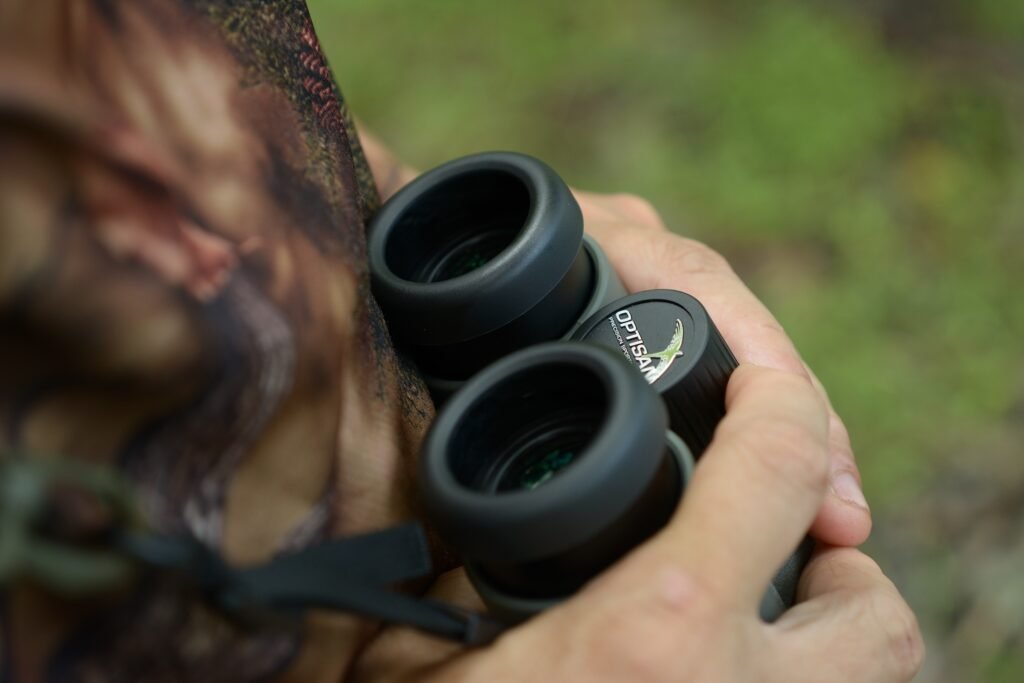
 When choosing your first pair of binoculars, it is best to consider a balance between weight and budget.
Weight Matters: Many people overlook weight during their purchase. Keep in mind that birdwatching often involves carrying binoculars on your shoulders for half a day or more. You should ask yourself: Is it too heavy for a long hike? If it’s for a child, can they hold it steady enough to avoid a shaky image that might cause dizziness? To ensure a comfortable experience, all Optisan binoculars come with a thick, premium neoprene neck strap designed for maximum pressure relief, so you don’t need to buy extra accessories.
Budget & Quality: Generally, a higher price tag reflects better optical performance and clarity. You should choose a model that fits your budget based on your current needs. However, if you are looking for a long-term investment, we generally advise against birding binoculars priced below US$100. Binoculars below this price point often suffer from unstable optical alignment and short warranty periods. They are also prone to causing eye strain, lack proper waterproof sealing (increasing the risk of internal fogging or mold), and most brands cannot provide repair services once the warranty expires.
Our Recommendation: For children or female birders starting out, we recommend looking for models weighing less than 600g. It is always best to test the “hand-feel” and grip in person. Optisan’s LR, LR ED, and EVR II series all offer 34mm objective models, which are lightweight yet provide more than enough optical performance for clear bird identification and observation.
Technically, there is no physical limit to how far binoculars can see!
Think of binoculars as a tool that provides magnification, which can be understood as “bringing the distance closer.” For example, if you observe someone 100 meters away with 10x binoculars, that person will appear as large as if you were standing only 10 meters away with your naked eye. The effective observation distance provided by magnification depends on the size of the target, lighting conditions, and environmental factors.
For instance, the Moon is about 380,000 kilometers away, yet we can see it with the naked eye. With a telescope/binoculars of about 15x to 30x magnification, most surface details become clearly visible. Similarly, while a person can typically be identified at 10 meters with the naked eye, a pair of 10x binoculars allows you to identify that same person from 100 meters away.
Yes, binoculars with waterproof sealing can be used normally in the rain. However, we recommend using a lens cloth to gently wipe any water off the lens surfaces after use. If water is allowed to air-dry naturally, it may leave stubborn water spots on the glass. In such cases, we suggest using a small amount of alcohol to gently dissolve the spots, then wiping the lens dry with a clean lens cloth.
For binoculars without waterproof sealing or more budget-friendly models, we strongly advise avoiding water exposure, especially near the eyepieces and objective lenses, to prevent internal fogging or water damage. After use in damp conditions, it is best to let the binoculars air-dry in a well-ventilated area to prevent mold growth or surface deterioration due to high humidity.
Within the same product series, an 8x model generally offers a wider field of view (FOV) and a more wide-angle perspective compared to a 10x model. This makes it much easier to locate and lock onto a target. While 10x magnification provides a slightly larger image, the narrower field of view can make it harder for beginners to find birds quickly.
If you are new to birdwatching and have no prior experience using binoculars, we highly recommend starting with an 8x magnification. It is more user-friendly, provides a steadier image, and makes the initial learning curve of spotting birds in the field much smoother.
Looking for the perfect balance? Within the same series, a larger objective lens captures more light, making it a powerhouse for dawn, dusk, or rainforest birding. The trade-off, of course, is the extra weight.
But here’s the pro tip: modern lens coatings have changed the game. Today, brightness is about quality over size. Many high-end compact models provide incredible clarity and light in a much lighter package. We always suggest getting hands-on with different models to find the right balance of weight and brightness for your specific needs.
Dizziness is usually caused by incorrect adjustment or technical issues. Here is a guide on how to use your binoculars correctly to avoid eye strain:
Interpupillary Distance (IPD) Adjustment: Everyone has a different distance between their eyes. If the two barrels are not aligned with your eyes, you will be forced to look through them at an angle, leading to dizziness. You must adjust the hinge of the binoculars until the two circles merge into a single, perfect circular image.
Diopter Adjustment: Check if your “zero setting” is correct. Most binoculars have a diopter adjustment ring (usually marked with + 0 -) to compensate for vision differences between your two eyes. If you do not have nearsightedness, or if your vision has been corrected to be equal in both eyes by glasses, ensure the indicator is set to the “0” position.
Optical Misalignment (Collimation Issues): If you have adjusted the IPD but still see “double images” (where a single object appears twice), the binoculars are likely misaligned. You can ask an experienced user to test them; if they see double images as well, the binoculars are no longer fit for use. Please return them to us for professional inspection and repair.
Other Factors: Lastly, using binoculars while walking or having blood sugar fluctuations can also contribute to dizziness!
See our How-to video here
When choosing binoculars for children, there are several key factors to consider beyond just age:
Interpupillary Distance (IPD): This is the distance between the pupils. If a pair of binoculars has a minimum IPD of 56mm but the child’s eyes are only 40mm apart, they will not be able to see through both barrels properly. Always check the minimum width adjustment.
Weight and Stability: For activities like birdwatching, which require holding binoculars up for long periods, observe whether the child can hold them steady. If the image is constantly shaking, it can lead to dizziness. Until they can hold them firmly, we suggest parents share their binoculars with the child to supervise their usage.
Safety and Care: Binoculars are precision optical instruments. Remind children to always wear the neck strap and avoid running, swinging the device, or using them while walking.
Crucial Safety Warning: Always explicitly instruct children NEVER to look directly at the sun or strong light sources through binoculars, as this can cause permanent eye damage.
Image shakiness is common, especially with higher magnification. You can achieve a much steadier view by following these techniques:
Forehead Support: If you are not wearing glasses, twist up the eyecups and gently rest them against your forehead or brow bone. This creates an extra point of contact that significantly reduces vibration.
Tuck Your Elbows: Keep your elbows tucked in close to your chest/ribs rather than flaring them out. This uses your torso for support and minimizes arm fatigue.
Stable Stance: Stand with your feet in a staggered position (one foot slightly in front of the other) rather than side-by-side. This improves your overall balance and reduces body sway.
Binoculars are precision optical instruments. Proper care ensures they last a lifetime:
Sun Safety: NEVER look directly at the sun with binoculars. The magnification will concentrate sunlight and cause immediate, permanent eye damage.
Cleaning the Lenses: Use an air blower or soft brush to remove surface dust first. For oil, smudges, or fingerprints, use the provided lens cloth to wipe gently. For stubborn marks (like dried water spots), apply a small amount of alcohol to dissolve the stain, then wipe dry with a clean cloth.
Storage: Ideally, store your binoculars in a dry cabinet (dehumidifier box). If you don’t have one, keep them in a well-ventilated, dry area.
Transportation: For shipping or checking luggage, use the provided semi-hard carrying case or wrap the binoculars securely to prevent movement and impact damage.
Optisan offers a Limited Lifetime Warranty on all optical specifications that are IPX7 waterproof. We are committed to keeping your vision clear for life.
Lifetime Coverage: For any non-accidental damage (e.g., optical misalignment/collimation issues occurred without dropping or impact), Optisan provides free repair or replacement with a similar model.
Loaner Program: We understand that being without your binoculars can be difficult. During the repair process, we can provide a loaner unit so you don’t miss any birding opportunities.
Accidental Damage: Even if the damage is accidental (user-inflicted), we offer professional repair services for a reasonable fee.
Important Notice: To maintain your warranty, do not attempt to disassemble the binoculars yourself. Please contact us directly for professional support.
See our warranty detail here
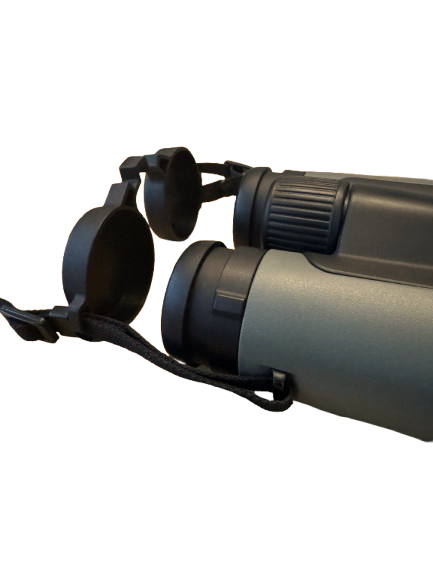
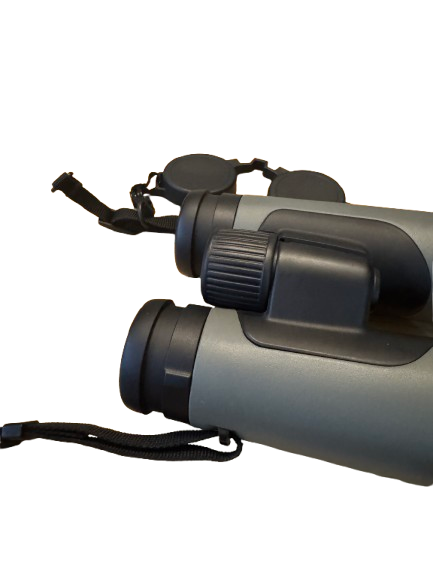
The opening on the right side of the ocular cap is a functional design.
It allows the user to either keep the guard tethered to both sides of the neck strap or unhook the right side so it hangs freely from the left during use.
 .
. 
The LR ED series is an optical upgrade over the standard LR series:
Brightness: LR ED features higher light transmission (approx. 86%) compared to LR (80%).
Resolution: LR ED uses Extra-low Dispersion (ED) glass for superior detail and reduced color fringing.
Close Focus: LR ED can focus as close as 2m, while LR is limited to 3m.
The EVR II is the refined successor to the original EVR series:
Wider Field of View (FOV): At 8x magnification, EVR II offers a 8.3° FOV, significantly wider than the original’s 7.5°, with thinner edges for a more immersive view.
Lightweight Design: The new structure is lighter; for instance, the 34mm model weighs only 540g.
As the flagship professional line, EVR II outperforms the LR ED in several key areas:
Optical Performance:
FOV: EVR II provides a much wider view (8.3° vs. 7.1° at 8x).
Clarity: Higher overall light transmission and significantly better resolving power, especially in challenging backlit conditions.
Structural Durability: EVR II utilizes a Magnesium-Aluminum Alloy chassis, providing superior structural stability and a longer product lifespan compared to standard materials.
The PL 80 ED spotting scope body can be paired with two types of zoom eyepieces, depending on your needs:
15-60x (Standard Eyepiece):
Lower Minimum Magnification: Starts at 15x, allowing for a brighter image at low power.
Affordability: Provides a more budget-friendly entry point for high-quality spotting.
25-60x (Wide-angle Eyepiece):
Superior FOV: Offers a significantly wider field of view (2.35° @ 25x vs. 2.1° @ 15x), making it much easier to locate and track moving subjects.
Viewing Comfort: Features thinner black edges (vignetting), providing a more immersive and relaxed observation experience.
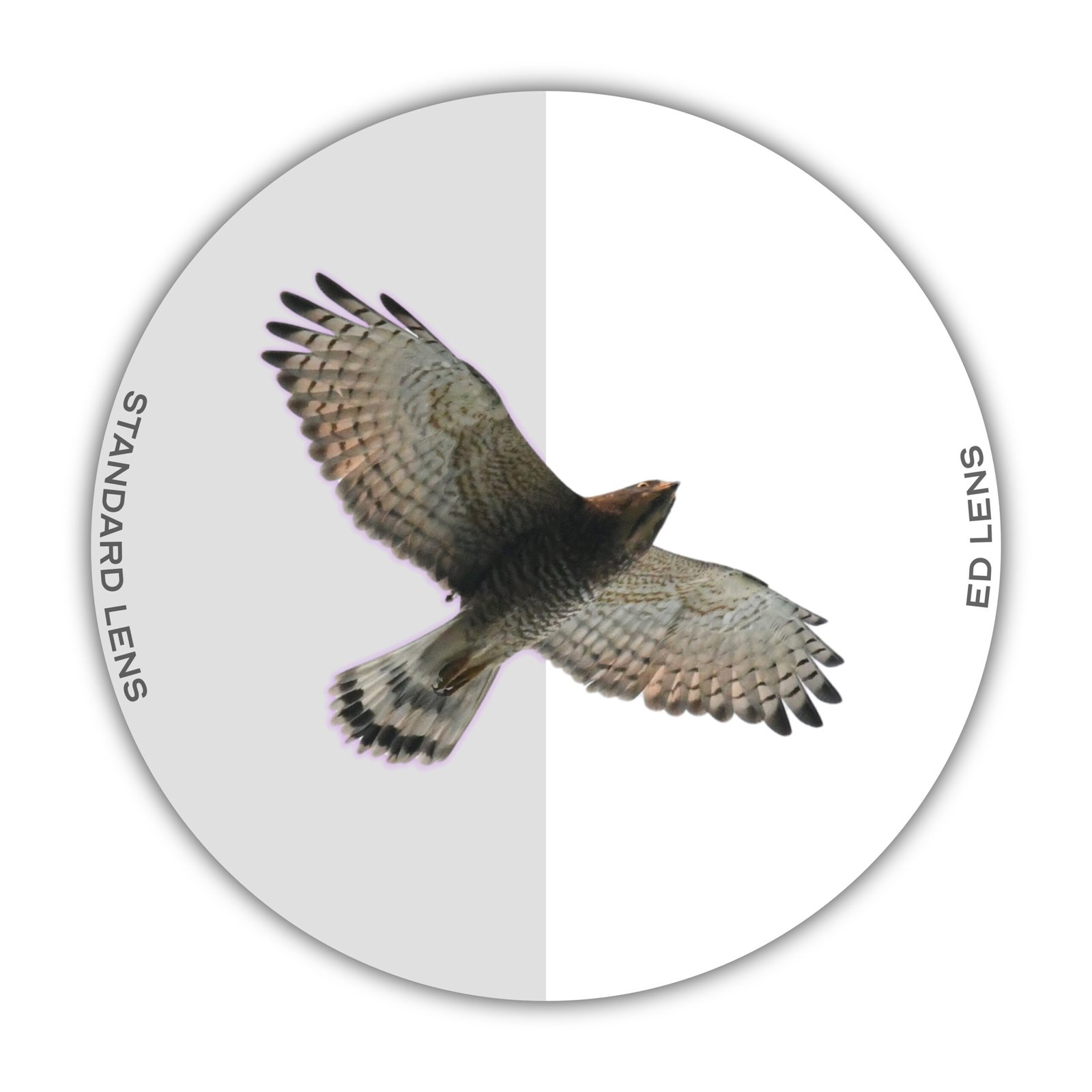
ED stands for Extra-low Dispersion. When light passes through a standard lens, different wavelengths (colors) refract at different angles and fail to converge at a single focal point. This results in unintended colors appearing around the edges of the subject, a phenomenon known as Chromatic Aberration (Dispersion).
Compared to standard lenses, ED glass has a significantly smaller refraction angle for different wavelengths, which effectively mitigates the severity of color fringing.
However, it is important to note:
No “Absolute” Fix: The use of ED glass alone does not completely eliminate chromatic aberration.
Varying Quality: Since there is no universal industry definition for “ED glass,” the materials and optical designs used by different manufacturers vary, leading to different levels of performance.
Evaluating Performance: When comparing the optical quality of binoculars, you should look at the actual severity of color fringing in practice, rather than solely relying on whether the product is labeled as having ED glass.
Lens coatings involve applying specific chemical substances to the surface of the lenses to alter the behavior of light. In most cases, these coatings are designed to increase light transmission and reduce reflection, resulting in a significantly brighter and clearer image.
Beyond standard anti-reflective coatings, Optisan utilizes specialized coatings to enhance your viewing experience:
Phase Correction Coating: Specifically used in roof prism binoculars. This coating corrects and synchronizes the phase shift of light beams as they reflect inside the prisms, ensuring the image appears with much sharper detail and higher resolution.
Hydrophobic (Water-repellent) Coating: Applied to the exterior surfaces of the objective lenses and eyepieces. This coating makes the glass surface “water-repellent,” causing liquids to bead up and roll off easily. This not only keeps your vision clear in damp conditions but also makes the lenses much easier to clean.
During your day-to-day use, dust, sand, and debris can accumulate in the gaps and grooves of the eyecups over time. Removable eyecups enable easy removal for thorough cleaning. This design ensures that you can maintain the hygiene of your binoculars without risking accidental damage to the eyepiece lenses during the cleaning process.
Modern binoculars feature multi-step twist-up eyecups. These allow both glass wearers and non-wearers to share the same binoculars while getting a full view. By adjusting the height of the eyecup in increments, every user can find the most comfortable position tailored to their unique eye distance, ensuring a clear and full view.
Eye relief is the specific distance from the eyepiece lens at which the eye can see the full field of view with minimal “black edges” (vignetting).
To ensure compatibility for all users, Optisan designs binoculars with an appropriate eye relief—usually long enough so that glass wearers are not restricted by the extra distance created by their glasses. Without sufficient eye relief, a person wearing glasses would be unable to see the entire magnified image.
The exit pupil is the diameter of the light beam that leaves the eyepiece. It is calculated by dividing the Objective Lens Diameter by the Magnification. For example, 10×42 binoculars have an exit pupil of 42 (mm) / 10 = 4.2 (mm).
This specification significantly affects both viewing comfort and brightness:
Human Pupil Matching: Since a human pupil is approximately 2–3mm in daylight and expands to 5–7mm at night, using binoculars essentially means aligning your eye with this light beam to see the magnified subject.
Ease of Use: A larger exit pupil (e.g., 8X42 vs. 8X34) makes it much easier for your eyes to find and stay aligned with the image, leading to a more relaxed viewing experience.
Low-light Performance: A larger exit pupil allows more light to enter your eye. In poor lighting conditions, such as at dawn or dusk, the view through the binoculars will appear brighter.
Note: While a larger objective lens provides a larger exit pupil, it also increases the weight of the binoculars. You should consider both factors when choosing the right model.